The sound usually comes first. A flutter behind the damper in March. Chirping that gets louder every morning in April. Something heavy shuffling in the flue at two in the morning. Then comes the question every owner in San Fernando eventually asks us: who do I call, and what will it cost to get them out and keep them out?
This post answers that from the point of view of hiring someone. It covers what each animal tends to mean, which parts of the job have a published price and which need a look first, and what to ask any company you are thinking of hiring.
Who is up there
The animal changes the job, so it helps to think about what you are hearing.
- Small birds. Chirping that peaks around feeding times, twigs and feathers on the hearth. Spring is the usual season. The nest sits on the smoke shelf just above the damper.
- Larger birds. Pigeons and doves sometimes roost on top of the flue or drop in through a wide opening. More droppings, fewer twigs.
- Squirrels and rats. Quick scratching, often in the daytime for squirrels and at night for rats. They carry in leaves, insulation and food scraps.
- Raccoons. Heavy movement, growling or chattering, and a smell that gets worse with time. A mother raccoon may use a chimney as a den for her young in spring.
In the foothill streets above San Fernando and up toward Santa Clarita, raccoons and squirrels are common. Closer to the flat streets of Canoga Park and Burbank, birds and rats show up more often. None of this is exact, but it gives you a sense of what to expect when you book.
Hiring the right kind of help
Not every animal job starts with a chimney sweep. Here is how we think about it, and how you should think about anyone you hire.
Is the animal still there? If it is a live raccoon, especially one with young, the first visit should be from someone who handles wildlife. Nobody should be reaching up the flue at a frightened adult raccoon. We tell you that straight away and come back once the den is empty.
Is it a nest with eggs or chicks? Many wild birds are protected by federal law. That means an active nest is usually left alone until the young have flown. A reputable company will say so rather than promising to clear it today.
Is the flue empty now? This is where we come in. Once the animal is gone, the work is clearing out what it left and closing the top so it cannot come back.
Ask any company these questions before you hire:
1. Will you check whether the nest is active before touching it? 2. Do you clear the smoke shelf, or only the part of the flue you can reach from the top? 3. What will you do about the opening the animal used? 4. Will I get a written price for anything beyond the sweep?
The parts with a published price
Two parts of the usual animal job carry a figure on our site:
- Sweeping the flue clean, from $400. That covers brushing out nest material, droppings, leaves and soot, clearing the smoke shelf and vacuuming the firebox. A big den or a nest that fell and jammed the damper can take longer, which is why it reads "from".
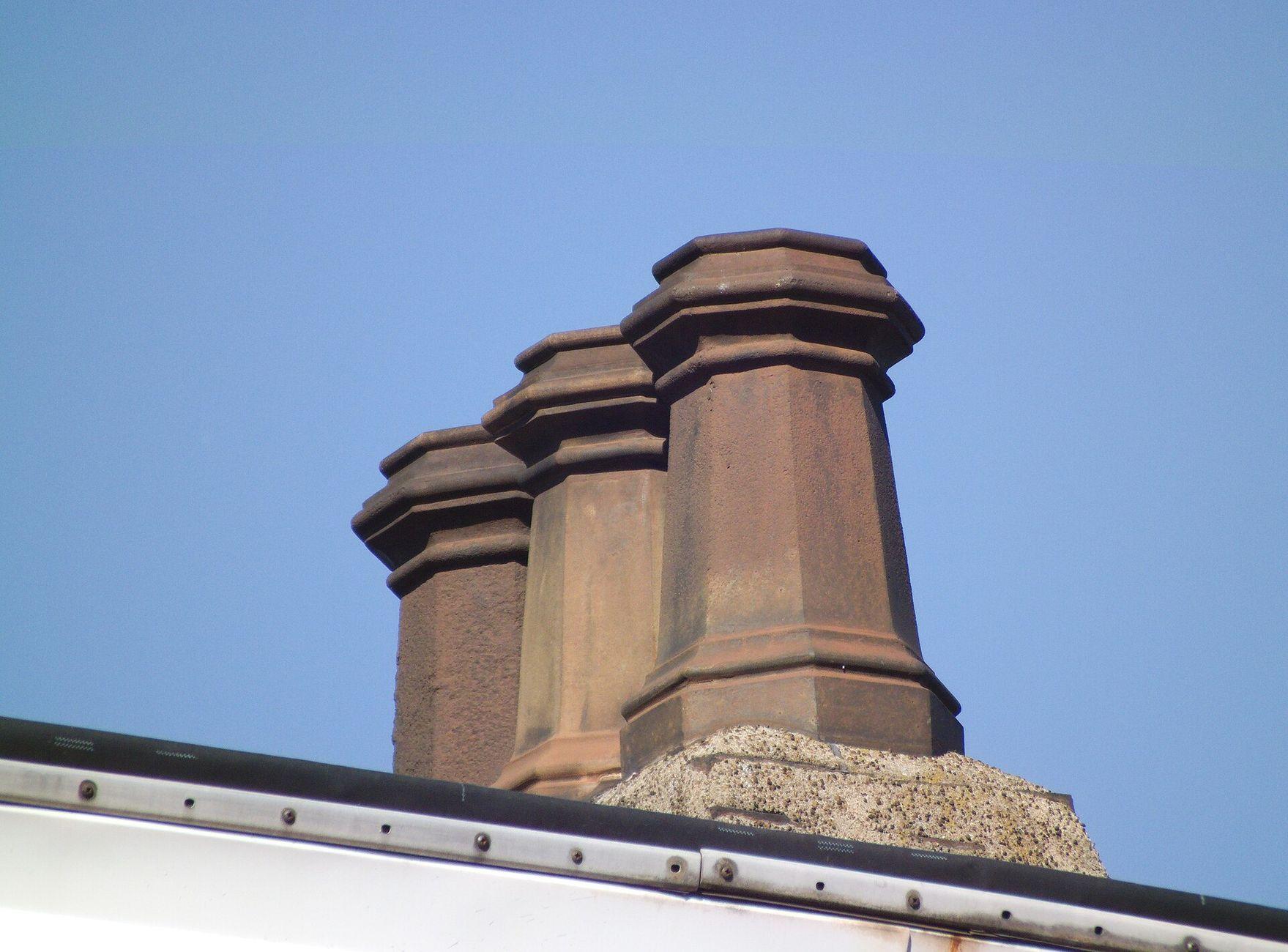
- A cap with a screen, quoted after we measure the flue. The screen is what stops the next tenant moving in. The price follows the number and size of flues, the metal and the roof itself. Our cap cost post goes through it.
Most animal calls end with both: a sweep to clear what is there and a cap to keep the top closed.
The parts we price after a look
Animals can do damage that does not show from the firebox. These are the usual extras, and each one gets a written quote once we have seen it:
- Damper. Droppings are acidic and rust a steel damper plate. Nesting can bend the frame. If the plate does not close, we look at damper repair.
- Crown. Raccoons climbing over the top chip at a crumbling crown. If there is nothing firm for a cap to sit on, the crown comes first.
- Flue tile. A den can sit on a cracked tile for months. The only way to see it properly is a camera, which is our Level 2 inspection at $375.
Once the flue is quiet and you know what you are dealing with, request a removal and cap visit. Tell us what you have been hearing, at what time of day, and whether anything has fallen into the firebox.
Smell, mess and the fireplace in the meantime
Until the job is done, keep the damper shut and do not light a fire. Smoke will not drive an animal out; it can trap one, and a nest on the smoke shelf is dry fuel. If there is a smell, it often comes from droppings or nesting material rather than the animal itself, and it fades once the flue is swept.
If the fireplace has glass doors, keep them closed so a bird that drops down stays in the firebox instead of the living room.
Why the top matters more than the removal
Clearing a chimney is satisfying. Closing it is what keeps you from calling again next spring. Animals return to the same chimney year after year because it worked last time. A cap with a sound screen is the end of that.
We work from San Fernando across Burbank, Santa Clarita and Canoga Park. For sweeps, see chimney sweep. For caps, see chimney cap installation.
If something is living in your chimney right now, or was until recently, head to the contact page and tell us what you have been hearing. We will tell you who should come first and what the next step costs.
Want Us to Take a Look?
Avery checks the flue for animals, clears it, sweeps it and caps it, with photos of what came out. We work from San Fernando out to Burbank, Santa Clarita and Canoga Park.